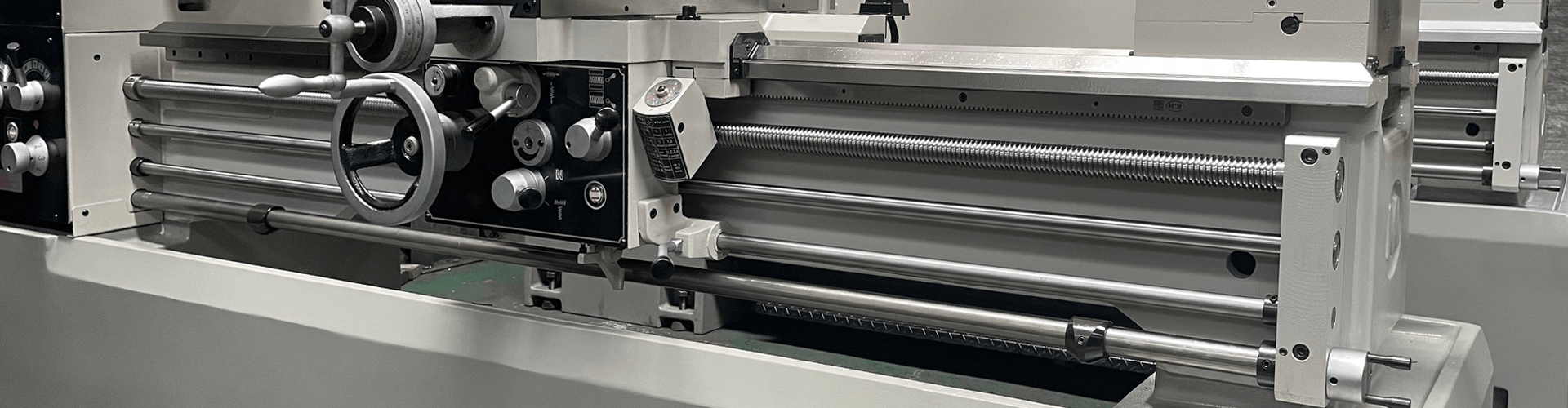
How to Choose the Right Manual Lathe for Your Workshop
A Technical Guide for Precision Machining Professionals
In the era of automated and CNC-driven production, manual lathes (also known as conventional lathes) remain indispensable for many workshops. Their mechanical simplicity, direct control, and adaptability make them ideal for custom machining, repair work, training, and prototype fabrication. However, choosing the right model requires a solid understanding of mechanical design parameters, workpiece characteristics, and process requirements.
1. Defining the Machining Parameters
Before evaluating any machine model, engineers should establish the machining envelope and performance requirements. The following parameters are critical:
| Parameter | Technical Consideration | Engineering Significance |
|---|---|---|
| Swing Over Bed & Spindle Bore | Determines the maximum workpiece diameter and the bar stock that can pass through the spindle. | A larger bore allows handling of pipe or shaft-type components efficiently. |
| Bed Width & Structural Rigidity | A wider bed increases stiffness and damping against vibration. | Ensures precision during heavy cuts and extends tool life. |
| Distance Between Centers | Defines maximum workpiece length. | Essential for long shafts or cylindrical components. |
| Spindle Speed Range & Gear Ratios | Influences achievable surface speed (m/min) at various diameters. | Directly affects surface finish and cutting tool performance. |
| Threading & Feed Mechanism | Availability of inch/metric threading and feed rate options. | Required for versatile operations and precision threading. |
| Workpiece Precision Requirement | Specifies tolerance for runout, roundness, and surface roughness. | Determines whether to select a standard or high-precision model. |
2. Comparative Overview of Conventional Lathe Series
Chushing’s product range covers multiple mechanical configurations, from compact precision units to heavy-duty industrial lathes. Each model series is engineered for specific operating conditions.
| Series | Technical Characteristics | Typical Specifications | Ideal Application |
|---|---|---|---|
| CS Series – High-Speed Precision Lathe | Compact construction with fine feed control and high spindle speed stability. | Spindle bore: 58–82 mm; bed width: 336 mm; center distance: 1,000–2,200 mm. | Suitable for small-diameter parts, toolroom operations, and high-speed light cutting. |
| HL Series – General-Purpose Precision Lathe | Balanced rigidity and precision; suitable for mixed workloads. | Spindle bore: 85–105 mm; bed width: 406 mm; center distance: 1,000–4,000 mm. | Ideal for medium-sized components and precision repair work. |
| HR Series – Heavy-Duty Lathe | Reinforced headstock, large spindle bore, and deep bed for heavy cutting torque. | Spindle bore: 105–155 mm; bed width: 458 mm; center distance: 1,100–8,000 mm. | Designed for large-diameter shafts, rollers, and heavy machining. |
| HRE Series – Extra Heavy-Duty Lathe | Extended torque output, oversized spindle bore (up to 230 mm), and enhanced bearing support. | Bed width: 458 mm; center distance: 1,100–8,000 mm. | Suited for massive cylindrical workpieces, energy equipment, and shipbuilding. |
From this comparison, several engineering insights emerge:
- Rigidity–Speed Trade-Off: Smaller-frame CS lathes achieve higher RPM but lower torsional stiffness; conversely, HR and HRE lathes favor torque over speed.
- Center Distance as a Limiting Factor: For long workpieces, stability across the bed and tailstock alignment precision are critical.
- Spindle Bore as Throughput Indicator: Larger spindle bores allow bar feeding and improve handling efficiency for tube-like components.
3. Structural and Design Factors That Influence Performance
Beyond size and capacity, mechanical construction determines long-term stability and machining quality. When assessing machine design, engineers should consider:
- Headstock and Transmission Design
Gear-driven or variable-speed spindles impact torque transmission efficiency. Properly hardened gears and precision bearings ensure low noise and minimal backlash. - Feed and Carriage Mechanism
High-quality leadscrews, feed shafts, and clutches minimize backlash and promote smoother tool movement. The cross-slide and compound rest assembly should allow fine angular adjustments for taper turning. - Bedway Geometry
Hardened and ground V-shaped guideways improve slide stability. Scraped or induction-hardened surfaces reduce wear during long-term use. - Tailstock Alignment and Support
Adjustable tailstock ensures precise center alignment and uniform pressure distribution. For long shafts, a follow rest or steady rest minimizes deflection. - Lubrication and Chip Management
Centralized lubrication systems maintain consistent film protection on moving parts. Chip trays and splash guards contribute to a cleaner, safer working environment. - Quality Assurance and Inspection
Machines should comply with international geometric accuracy standards (e.g., ISO 1708, DIN 8605). Factory test certificates covering runout, straightness, and parallelism validate mechanical precision.
4. Methodical Selection Process
A systematic approach ensures optimal machine selection for your specific application:
- Step 1 – Define Workpiece Requirements: List maximum/minimum diameters, lengths, materials, and tolerance levels.
- Step 2 – Determine Machine Envelope: Filter by spindle bore, swing over bed, and center distance.
- Step 3 – Evaluate Power and Speed: Verify that spindle horsepower and speed range suit your typical cutting speeds (Vc) and material removal rates.
- Step 4 – Assess Structural Features: Compare bed width, carriage rigidity, and tailstock design for vibration control and precision holding.
- Step 5 – Analyze Support and Serviceability: Ensure the manufacturer provides part availability, local service, and documentation for maintenance procedures.
5. Engineering Recommendations
- For general-purpose machining, the HL Series offers balanced capability and cost efficiency.
- For precision and small-diameter parts, the CS Series provides high spindle speed and fine control.
- For heavy or large workpieces, the HR or HRE Series delivers superior rigidity and torque capacity.
When possible, request test cuts or sample part measurements to confirm surface finish and accuracy before procurement. Evaluating vibration response, noise level, and control ergonomics will also help verify the suitability of the selected machine.
Conclusion
Selecting a manual lathe is an engineering decision that requires aligning machine dynamics, structural design, and process demands. A well-chosen conventional lathe provides the foundation for precise, efficient, and repeatable machining.
With decades of design experience, Pin Shin offers a full range of manual lathes engineered to satisfy different operational requirements — from small-scale toolrooms to heavy industrial production lines. Their robust construction, precision assembly, and reliable performance make them a dependable choice for professional machining environments.